
Introduction
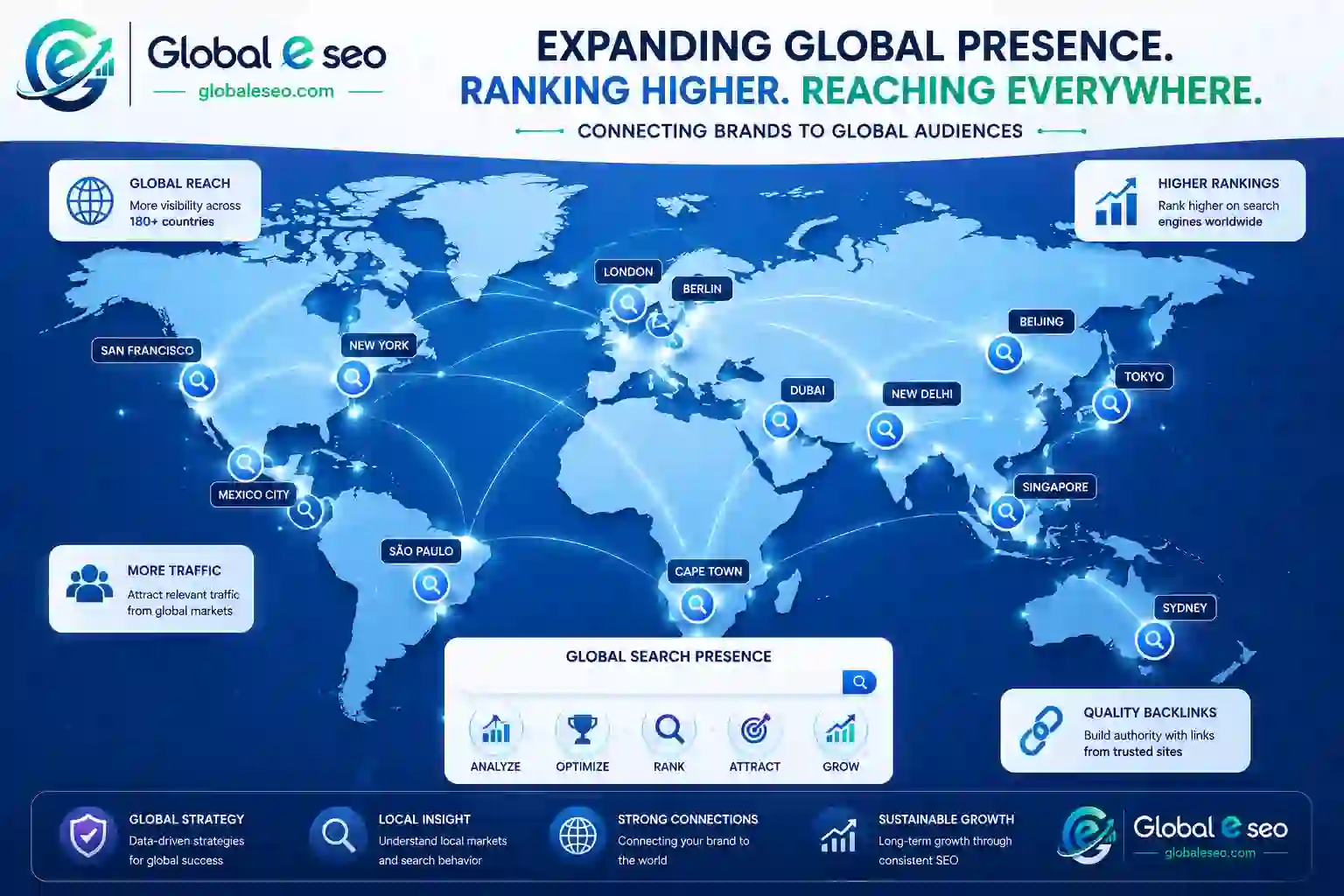
In today's interconnected world, expanding your business's reach beyond borders has never been more achievable. A well-built global SEO strategy is the key to unlocking international markets and establishing a strong online presence worldwide. Whether you're a multinational corporation or a small business with global ambitions, implementing an effective global SEO approach can drive organic traffic, boost brand visibility, and increase revenue across multiple countries and languages.
This guide breaks down exactly what global SEO is, why it matters, and how to build a global SEO marketing plan that actually converts international visitors into customers.
Table of Contents
What Is Global SEO?
What is global SEO? In simple terms, global SEO is the process of optimizing a website so it ranks well in search engines across multiple countries, regions, and languages — not just in one home market. Unlike traditional local SEO, which focuses on ranking for a single geographic area, global SEO involves managing multiple audiences, languages, currencies, and search engine algorithms simultaneously.
A strong global SEO strategy accounts for cultural differences, local competitors, regional search engines (such as Baidu in China or Yandex in Russia), and the technical infrastructure needed to serve the right content to the right audience. Done correctly, it allows a single brand to compete effectively in dozens of markets at once.
Why Every Growing Business Needs a Global SEO Strategy
As competition increases within domestic markets, more companies are turning to international expansion to fuel growth. A dedicated global SEO strategy helps businesses:
- Reach new customer segments in untapped regions
- Build brand authority and trust across multiple countries
- Diversify traffic sources so the business isn't reliant on a single market
- Increase revenue through new, previously inaccessible audiences
- Stay ahead of competitors who haven't yet localized their SEO efforts
Let's explore the essential elements of a successful global SEO strategy and how businesses can navigate the complexities of international markets.
1. Market Research and Localization
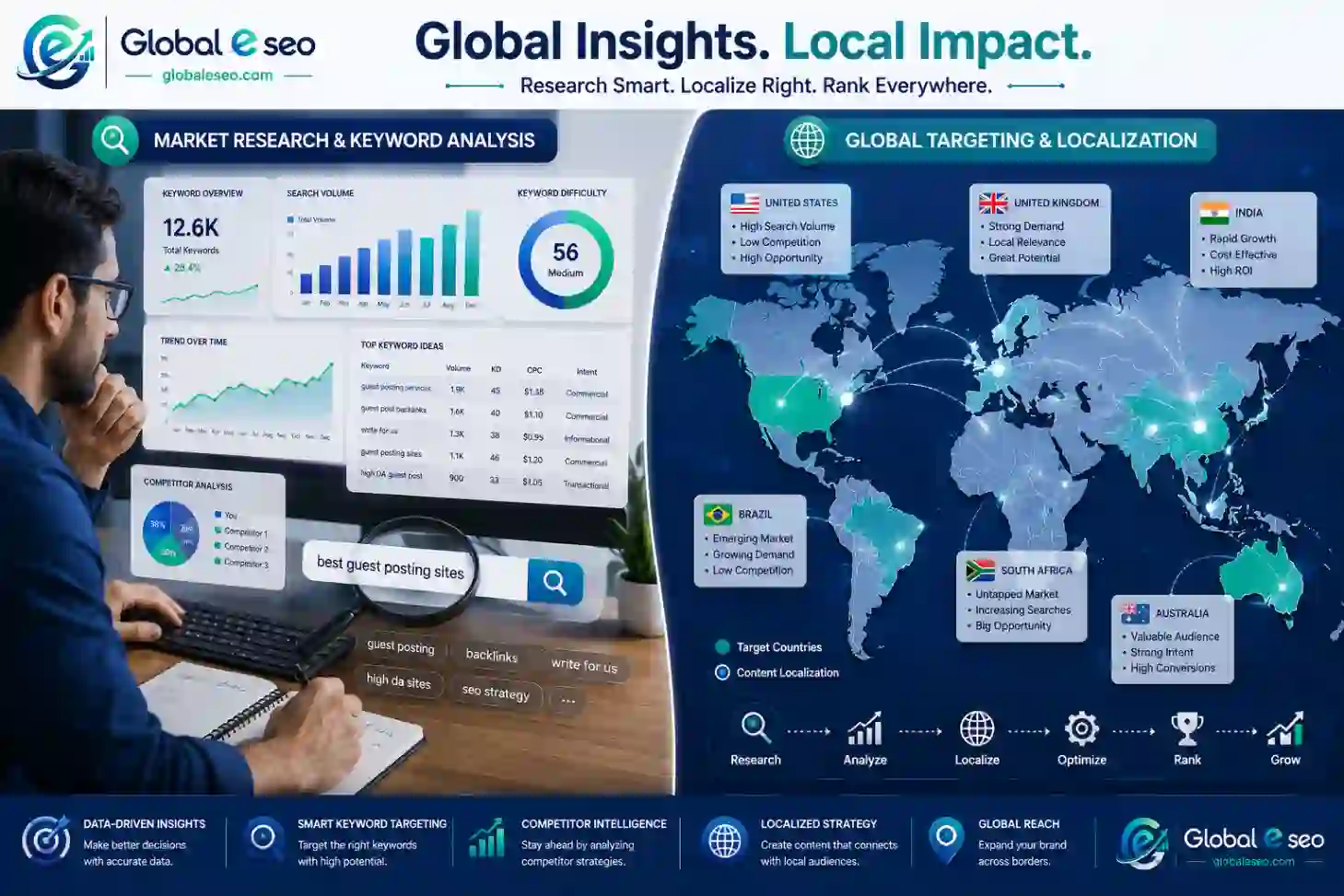
Before diving into global SEO, it's crucial to conduct thorough market research to understand the preferences, behaviors, and search trends of your target audience in different regions. Identify relevant keywords, search terms, and cultural nuances that resonate with local audiences.
Utilize tools like Google Keyword Planner, SEMrush, and Ahrefs to uncover valuable insights and tailor your content accordingly. Pay close attention to how people search — for example, the phrase "global seo strategy" may be searched differently in the UK versus the US versus India, even though English is spoken in all three.
Localization is key to connecting with international audiences, so translate your website content, meta tags, and keywords into the languages of your target markets to ensure relevance and authenticity. Localization goes beyond direct translation — it means adapting tone, currency, measurement units, imagery, and even color schemes to match cultural expectations.
2. International Website Structure and Geotargeting
Establishing the right website structure is essential for effective global SEO. Consider whether to use a country-code top-level domain (ccTLD), subdomains, or subdirectories to organize your international content:
- ccTLDs (e.g., example.de, example.fr) send the strongest geographic signal but require more resources to maintain.
- Subdomains (e.g., de.example.com) are easier to set up and still allow some separation of international content.
- Subdirectories (e.g., example.com/de/) are the easiest to manage and consolidate domain authority under one root domain.
Each option has its advantages and considerations, so choose the approach that best aligns with your business goals and resources. Implement geotargeting settings in Google Search Console to specify the target country for each version of your website, signaling to search engines the intended audience for your content and improving its visibility in relevant search results. Don't forget to implement hreflang tags correctly, as these tell search engines which language and regional version of a page to serve to each user.
3. Multilingual Content Creation and Optimization
Create high-quality, multilingual content that resonates with your target audiences in different regions. Invest in professional translation services or native speakers to ensure accuracy and cultural relevance — machine translation alone often misses tone, idioms, and search intent.
Optimize each piece of content for relevant keywords and search terms in the target language, including meta tags, headings, alt text, and URLs. Provide valuable information, address local needs and preferences, and demonstrate an understanding of the local culture to build trust and credibility with international audiences. Regularly update and localize your content to keep it fresh and relevant in each market.
This is also where a broader global SEO marketing mindset matters — content shouldn't just be translated, it should be re-strategized to match how each market actually searches and buys.
4. Backlink Building and International Outreach
Backlinks are a crucial ranking factor in global SEO, so focus on building a diverse and authoritative backlink profile for each version of your website. Engage in international outreach efforts to connect with influencers, bloggers, and industry publications in your target markets.
Guest posting, collaborations, and partnerships can help you earn valuable backlinks from reputable sources and expand your reach to new audiences. Leverage social media platforms, online forums, and networking events to establish relationships and amplify your brand's presence in international markets. Prioritize backlinks from domains that are both regionally relevant and topically related to your industry — a link from a respected local publication often carries more weight than a generic global directory listing.
5. Mobile Optimization and International User Experience
Mobile optimization is paramount in global SEO, as mobile usage continues to rise globally, particularly in emerging markets where mobile is often the primary — or only — way people access the internet. Ensure that your website is responsive and performs well on various devices and screen sizes.
Prioritize page speed, intuitive navigation, and user-friendly interfaces to enhance the mobile user experience. Consider local mobile trends and preferences when designing and optimizing your website for different markets. Implement schema markup and structured data to provide search engines with context about your content and improve its visibility in mobile search results.

6. Global SEO Marketing: Aligning SEO With Your Broader Strategy
Global SEO doesn't operate in a vacuum — it should be tightly integrated with your overall global seo marketing efforts, including paid media, social media, PR, and email campaigns. When SEO and marketing teams collaborate:
- Keyword insights from SEO can shape paid ad campaigns in each region
- Content created for SEO can be repurposed for social media and email
- PR and outreach efforts that build brand awareness also generate valuable backlinks
- Marketing campaigns can be timed around seasonal or regional search trends
Treating global SEO as one pillar of a unified marketing strategy — rather than an isolated technical task — leads to stronger, more consistent results across every market you enter.
7. Performance Tracking and Continuous Improvement
Monitor the performance of your global SEO efforts using analytics tools like Google Analytics, Google Search Console, and third-party SEO platforms. Track key metrics such as organic traffic, keyword rankings, conversion rates, and user engagement across different regions and languages.
Analyze the data to identify trends, opportunities, and areas for improvement. Adjust your global SEO strategy accordingly, experimenting with new tactics, refining existing content, and optimizing your website for better results. Continuous monitoring and optimization are essential for staying competitive in the ever-evolving landscape of international SEO.
Common Global SEO Mistakes to Avoid
- Relying solely on machine translation instead of localized, native content
- Ignoring hreflang tags, causing search engines to serve the wrong language version
- Using a single generic keyword list instead of researching per-market search behavior
- Neglecting page speed and mobile experience in developing markets
- Failing to build region-specific backlinks and relying only on global links
- Not tracking performance separately for each target country or language

Conclusion
In conclusion, a global SEO strategy is a multifaceted and dynamic approach to optimizing websites for international audiences and driving organic traffic from around the world. By conducting thorough market research, implementing localization strategies, creating multilingual content, building a strong backlink profile, optimizing for mobile, aligning with broader global seo marketing efforts, and continuously monitoring performance, businesses can expand their reach, increase brand visibility, and achieve success in international markets.
With the right strategy and execution, global SEO can be a powerful tool for driving growth and achieving global dominance in the digital age.