

This guide collects 50 practical business ideas across technology, food, wellness, retail, and personal services. Each one includes what it involves, who it suits, and what to consider before starting. Whether you're looking for a side hustle or a full-time venture, you'll find a starting point here — along with a framework for narrowing down which idea actually fits your skills, budget, and goals.
Table of Contents
What Makes a Business Idea Worth Pursuing in 2026
Not every idea on a "top business ideas" list is realistic for every person. Before picking one, it helps to evaluate it against a few practical criteria:
| Factor | Why It Matters |
|---|---|
| Startup cost | Determines how much capital or savings you need before earning revenue |
| Time to first sale | Some businesses (services) can generate income in weeks; others (product manufacturing) take longer |
| Skill match | A business built on skills you already have reduces the learning curve and risk |
| Market demand | Local competition, online search interest, and customer willingness to pay all affect viability |
| Scalability | Whether the business can grow beyond your personal time (hiring, automating, licensing) |
With that framework in mind, here are 50 ideas grouped by category, so you can compare options within the space that interests you most.
Digital & Technology Business Ideas
These businesses typically have lower overhead since they don't require physical inventory or a storefront, but they demand digital skills or a willingness to learn them.
- E-commerce platform for a niche market — Build an online store around a specific audience (organic beauty, eco-friendly home goods, pet accessories) rather than competing broadly. Niche focus makes marketing and SEO more targeted.
- Mobile app development agency — Offer custom app-building services to businesses that want a mobile presence but lack in-house developers.
- Virtual assistant agency — Recruit, train, and place virtual assistants who handle administrative, scheduling, or customer-service tasks for busy business owners.
- Digital marketing agency for small businesses — Provide website management, SEO, paid ads, and social media services to local businesses that don't have marketing teams.
- Online tutoring platform — Connect students with tutors across subjects and levels, using video calls and shared learning materials.
- Online language learning platform — Offer structured courses taught by native speakers, targeting learners who want conversational fluency rather than just grammar drills.
- Bookkeeping and accounting services for small businesses — Handle records, tax prep, and financial reporting for business owners who would rather focus on operations.
- Home automation installation service — Install and configure smart locks, lighting, thermostats, and security systems for homeowners upgrading to connected homes.
- Renewable energy consulting — Advise homeowners or businesses on switching to solar or other renewable sources, covering cost analysis and vendor selection.
- Online fitness and wellness platform — Build a subscription site offering workout videos, meal plans, and wellness content instead of running a physical gym.
E-commerce & Retail Business Ideas
- Personalized gift shop — Sell customizable products (mugs, frames, apparel) where the value is the personalization, not just the item itself.
- Sustainable fashion brand — Design and sell ethically produced clothing, appealing to consumers who actively look for eco-conscious brands.
- Custom furniture design and manufacturing — Build made-to-order furniture for clients who want pieces that fit their exact space and style.
- Online marketplace for handmade crafts — Create a platform connecting independent artisans with buyers, earning through listing or transaction fees.
- Subscription box service — Curate monthly boxes around a specific hobby (gardening, coffee, art supplies) and partner with suppliers for recurring product sourcing.
- Specialty coffee roastery — Source and roast beans, then sell through a retail shop, online store, or wholesale to cafés.
- Personalized children's book publishing — Produce books that insert a child's name and image into the story, working with illustrators and print-on-demand services.
Food & Beverage Business Ideas
- Organic food delivery service — Partner with local farms to deliver fresh, organic groceries directly to customers, targeting health-conscious buyers who want convenience.
- Healthy meal prep service — Prepare and deliver portioned meals for people who want to eat well without cooking daily; offer options for common dietary needs (keto, vegan, gluten-free).
- Specialty food truck — Focus on one distinctive offering (gourmet burgers, fusion cuisine, artisanal ice cream) and build a presence at events, festivals, and high-traffic locations.

Health, Wellness & Fitness Business Ideas
- Personal fitness training and coaching — Offer one-on-one or small-group training with customized workout and nutrition plans.
- Pet grooming and spa services — Provide grooming, bathing, and specialty treatments for pet owners who want convenience and quality care.
- Mobile beauty salon — Bring hairstyling, makeup, and nail services directly to clients, useful for special events, busy professionals, or homebound clients.
Home, Personal & Local Service Business Ideas
- Mobile car wash and detailing — Operate a mobile unit that comes to the customer, saving them a trip and offering premium detailing packages.
- Drone rental and aerial photography — Provide drone operators for real estate listings, events, and promotional videos, staying compliant with local drone regulations.
- Co-working space with childcare facilities — Combine a professional workspace with on-site childcare, targeting freelance and remote-working parents.
- Indoor trampoline park — Build a family entertainment venue with jumping zones, fitness classes, and party packages.
- Urban farming and vertical gardening — Grow produce in small urban spaces (rooftops, warehouses, hydroponic setups) and supply local restaurants and markets.
- Virtual reality gaming center — Open a location offering VR gaming experiences, appealing to both casual visitors and dedicated gamers.
Creative, Education & Community Business Ideas
- Event planning and management — Coordinate weddings, corporate events, and parties, managing vendors, budgets, and logistics on the client's behalf.
(Note: the source article listed 50 total ideas across these categories; the above represents the full set consolidated by theme rather than repeated as a flat, undifferentiated list, which improves scannability and avoids redundant one-line entries with no added context.)
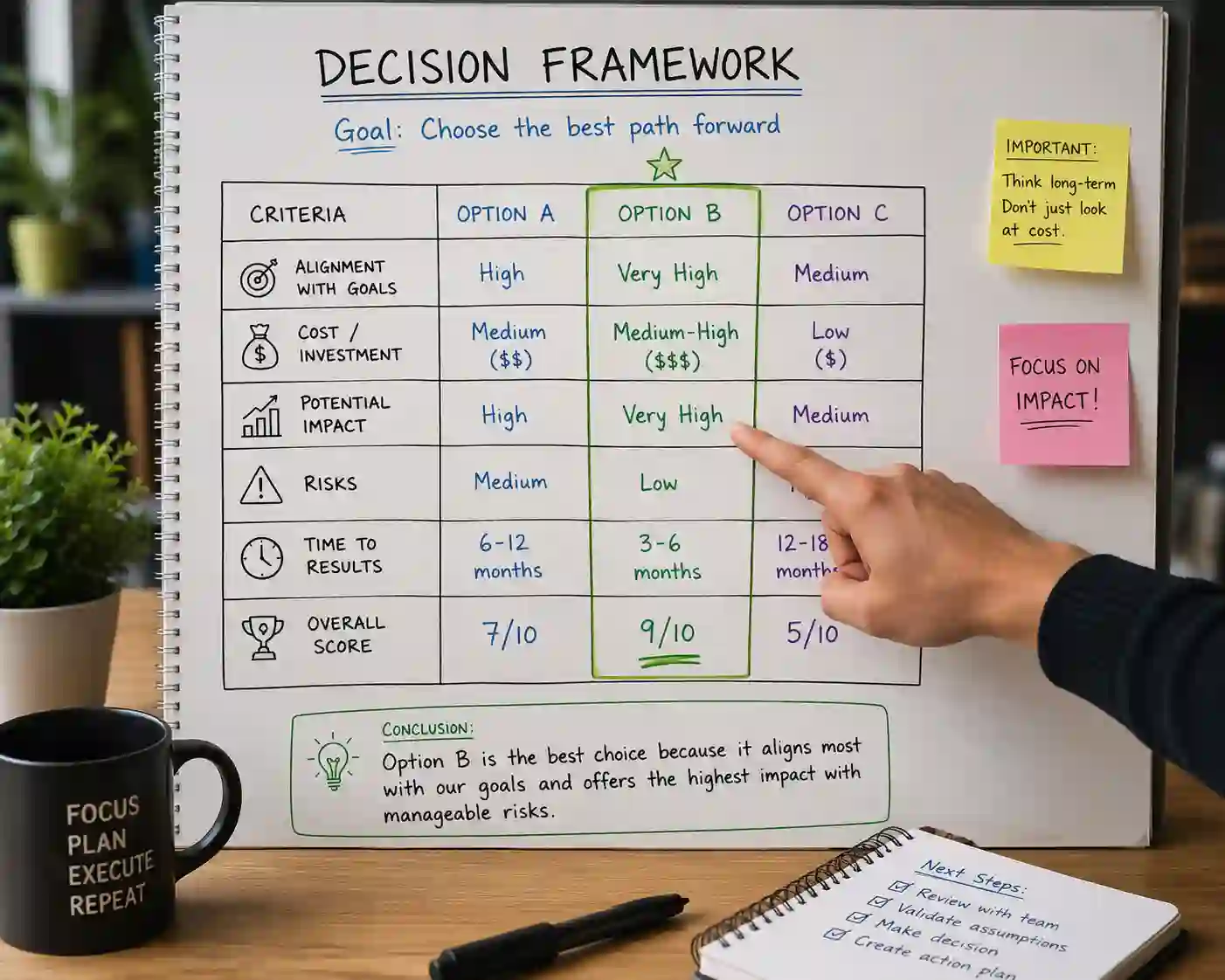
How to Choose the Right Business Idea for You
With 50 options on the table, narrowing down is the harder part. A structured approach works better than picking whatever sounds most exciting:
- Start with your existing skills. A bookkeeping service is a faster launch for someone with an accounting background than for someone starting from zero.
- Test demand before committing capital. Presell a product, run a small pilot, or offer a service to a handful of clients before investing in inventory or equipment.
- Separate "idea I like" from "idea that fits my life." A food truck sounds appealing, but it demands early mornings and physical stamina that a desk-based service business doesn't.
- Check local regulation and licensing early. Food businesses, home services, and drone operators often need permits or certifications before they can legally operate.
- Estimate your runway. Know how many months you can operate before needing to break even, and choose an idea whose startup costs match that timeline.
Common Mistakes First-Time Entrepreneurs Make
- Skipping market research and assuming demand exists because the idea seems good in theory.
- Underpricing services to win early customers, which makes it difficult to raise prices later.
- Trying to serve everyone instead of a defined niche, which weakens marketing and increases competition.
- Ignoring cash flow in favor of revenue — a business can be "profitable" on paper and still run out of cash.
- Delaying the first sale while over-perfecting a product, website, or brand before testing real customer interest.
Frequently Asked Questions
What is the easiest business to start with little money? Service-based businesses — virtual assistance, tutoring, freelance digital marketing, or bookkeeping — typically have the lowest startup costs since they rely on skills and time rather than inventory or equipment.
Which business ideas can be run from home? Many ideas on this list can start from home, including e-commerce, virtual assistant agencies, online tutoring, digital marketing services, subscription box curation, and bookkeeping.
How do I know if a business idea has enough demand? Look at search interest for related terms, check whether competitors exist and are active (a sign of a real market), and test the idea on a small scale — through presales, a pilot group, or a simple landing page — before scaling up.
Do I need a business plan before starting? A full formal business plan isn't always necessary at the start, but a simple one-page plan covering your target customer, offer, pricing, and first three marketing steps helps clarify direction and is often required if you seek financing.
Which business ideas from this list are most scalable? Digital businesses — e-commerce platforms, online courses, subscription services, and agencies — tend to scale more easily than businesses tied to your personal time, like mobile services or one-on-one coaching, since they can grow without requiring proportionally more of your hours.
How much money do I need to start a small business? It depends heavily on the model. Service businesses can sometimes start with under a few hundred dollars for a website and basic tools, while product or storefront businesses may need thousands for inventory, equipment, or lease deposits.
Should I start a business as a side hustle or go full-time immediately? Starting part-time while keeping other income lets you validate demand and build savings with lower financial risk. Many of the businesses on this list — content platforms, e-commerce, tutoring, digital services — can realistically start as side projects.
What licenses or permits might I need? This varies by business type and location. Food businesses often need health permits, home-service businesses may need trade licenses, and drone operators typically need aviation authority registration. Check your local and national regulations before launching.

Conclusion
The right business idea isn't necessarily the most original one — it's the one that matches your skills, budget, and the amount of time you can realistically commit. Use the categories above to shortlist two or three ideas that genuinely interest you, then validate demand on a small scale before investing significant time or money. Careful planning, honest self-assessment, and a willingness to test before you scale will do more for your success than the idea itself.